Weight Is the Quiet One
Body condition scoring, why owners consistently miss it, and what an extra kilogram quietly costs an animal over time.
Why Weight Is the Last Thing Owners Notice
There is a peculiar blindness that comes with loving an animal every day. You stop seeing the gradual rounding of a jawline, the way a once-prominent spine has disappeared under padding, the slight shortening of a dog's stride that sets in so slowly it never triggers alarm. Weight change — upward or downward — is almost always invisible to the people who care most, precisely because they are there for every incremental gram of it. The vet, who sees your animal every year or two, has no such blind spot.
This is not a failing. It is how human perception works. Studies in human medicine have documented the same phenomenon with children; parents consistently underestimate excess weight in their own. With pets, the problem is compounded by cultural noise: the round, well-padded cat has become shorthand for a contented one, and the dog who clears his bowl inside thirty seconds is assumed to be thriving. Portion sizes on food packaging are often calculated to sell product, not to reflect what a specific animal — with its own breed, neuter status, age and activity level — actually needs.
The first sign many owners get is a number on the waiting-room scales that doesn't match what they expected, or an offhand comment during a routine consultation that lands harder than intended. "He's a little heavy" is four words that can produce defensiveness, guilt or simply disbelief. Understanding what the vet is actually measuring when they run their hands along your animal's ribs — and why that matters more than the number on the scale alone — makes the conversation considerably easier.
The Condition Score: What the Vet's Hands Are Reading
The number the vet writes down after weighing your animal is useful. The body condition score, or BCS, is more useful. It is a standardised assessment of body fat relative to frame, usually recorded on a nine-point scale (though some practices use a five-point scale; the math converts simply). A score of four or five on the nine-point scale represents ideal condition. Below three is underweight. Six to seven is overweight, and eight or nine means obese by clinical definition.
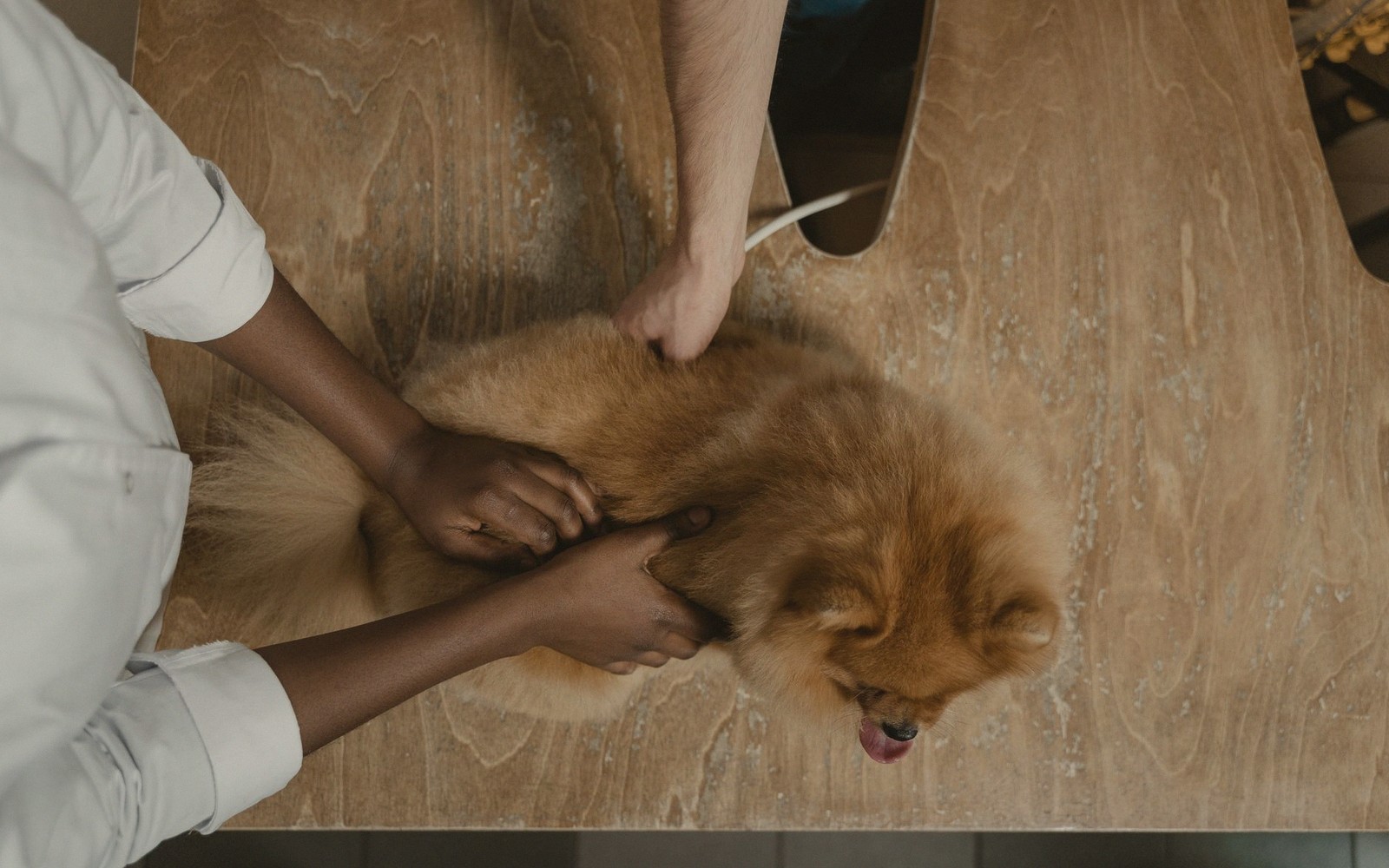
The assessment is tactile and systematic. The vet or nurse runs fingers along the ribcage: ribs should be palpable with light pressure, like the back of your hand, not buried under a layer that requires firm pressing to reach. They assess the waist from above — there should be a discernible narrowing behind the ribs — and the abdominal tuck from the side, where the belly should angle upward between the ribcage and the hindquarters rather than hanging level or drooping. In cats, the primordial pouch (the loose fold of skin on the lower abdomen) is normal anatomy and not, by itself, a sign of excess weight; a BCS assessment looks past it to the fat pad beneath and over the ribs.
Rabbits and small animals are scored on their own adapted frameworks, looking at bony prominences — the spine, hips, and ribs — with the same logic: the landmarks should be findable without excavation, and should not be standing in sharp relief either. A rabbit who is carrying too much weight is a particular welfare concern, because the excess makes grooming the hindquarters impossible, which creates a spiral of skin problems.
The scale weight and the BCS together give a picture that neither provides alone. A heavily muscled dog can be heavier than average for its breed and in excellent condition; a slender-framed dog can be at a perfectly average weight and still be carrying excess fat. This is why the vet's hands matter.

What the Extra Weight Is Actually Doing
The framing of excess weight as an aesthetic issue is almost entirely wrong, and yet it is the framing most pet owners unconsciously carry. "A bit chunky" sounds benign. The clinical reality is considerably less so.
Joints bear the cost first and most visibly. Every additional kilogram above ideal body weight increases the load on hip, elbow, and stifle joints with each step, at a multiplier significantly above one-to-one — the geometry of a dog's gait means a small amount of excess weight translates to a meaningfully larger force through the joint surface. In an animal already predisposed to osteoarthritis, or recovering from orthopaedic surgery, this is not a minor consideration. Pain scores in dogs with arthritis improve measurably when body weight is brought to ideal; this is one of the better-evidenced findings in small-animal medicine.
The respiratory system is next. Fat deposits around the chest wall and abdomen restrict the depth of each breath. In brachycephalic breeds — bulldogs, French bulldogs, pugs, Persian cats — who already operate on a narrow respiratory margin, excess weight can tip manageable discomfort into genuine distress. Even in animals without breed-specific airway compromise, heat regulation becomes harder: fat is an insulator, and an overweight dog on a warm day is working against itself.
Metabolic and endocrine consequences develop more quietly. Obesity in cats is a significant risk factor for hepatic lipidosis — a dangerous liver condition that can develop with alarming speed when an overweight cat stops eating, even briefly — and for feline diabetes mellitus. The relationship between excess fat tissue and insulin resistance in cats is well established; weight loss, in many cats with early-stage diabetes, can meaningfully improve or in some cases resolve the condition. In dogs, excess weight worsens hypothyroidism management, complicates Cushing's disease monitoring, and raises anaesthetic risk in ways that influence both the drugs chosen and the monitoring required.
Lifespan data are harder to pin to a single figure without citing specific studies, but the direction of evidence is consistent and has been for decades: animals maintained at ideal body condition live longer than those kept overweight, and they reach the end of that longer life in better physical condition.
What to Do With This Information
The point is not to feel bad. The point is to be able to see what the vet sees, ask the right questions, and take the information seriously rather than deflecting it.
Learning to do a basic BCS assessment at home takes about five minutes and a cooperative animal. Feel along the ribcage with gentle, flat-handed pressure. Can you feel each rib individually without pressing hard? Look down from above at the waist. Is there a discernible narrowing, or does your animal look like a rectangle? Look from the side: is there an abdominal tuck, or does the belly hang level? None of this replaces a professional assessment, but doing it monthly means you are more likely to catch a trend before it becomes a problem.
Feeding is where most of the work happens. Portion size matters far more than brand, and the packaging guide is a starting point, not a rule. Neutered animals, older animals, and those with very low activity levels need considerably less than the guideline suggests. Treats contribute calories that many owners do not count; a medium biscuit treat for a small dog can represent a meaningful fraction of its daily energy allowance. Nurse clinics are an underused resource here: a nurse appointment specifically for a weight check and feeding review costs less than a full consultation, takes the conversation out of the crowded middle of a health visit, and lets the nurse give it proper time.
For underweight animals, the calculus is different but the principle is the same: the number and the condition score together matter, and the cause matters more than the symptom. An animal losing weight without a change in diet warrants a call — what that might mean and how a vet investigates it is a separate question, but it should be asked promptly.
Slow weight change in either direction is rarely dramatic on any given day, which is exactly what makes it easy to ignore. The vet visit that mentions it is doing you a service, even when it stings slightly to hear. The animal in the room cannot tell you that its joints hurt a little more than they did last year, that the stairs it still climbs have quietly become harder, or that the breath it catches in the afternoon heat is laboured in a way it was not before. Weight is the quiet one — the condition that accumulates without announcement and costs the most over time. The ribs under your hands are where the conversation starts.