What a Nurse Clinic Is For
Not every visit needs the vet's diary. Weight checks, claw trims, dental scores and more fall squarely in the nurse's lane — and booking one is often faster, cheaper and exactly right.
What actually happens in a nurse clinic
Veterinary nurses are qualified clinicians, not assistants who happen to be handy with a towel. In the UK, Registered Veterinary Nurses (RVNs) hold a regulated qualification and are entered on the Royal College of Veterinary Surgeons' Register of Veterinary Nurses, and Schedule 3 of the Veterinary Surgeons Act allows them to carry out certain procedures under veterinary direction — meaning there is a defined, legally recognised scope to what they can do. Nurse clinics sit well within it, and most practices run them as a matter of routine.
The appointment typically runs fifteen to thirty minutes and focuses on the preventive and monitoring work that does not require a differential diagnosis. That is not a limitation — it is the point. A nurse clinic is designed for the jobs where a trained pair of eyes, a set of scales and careful hands are what the animal actually needs. Bringing those checks under one roof, on a regular schedule, is how problems are caught early rather than stumbled on late.
No doses and no home remedies here: anything you give an animal should come from your own vet, for that animal.
The things a nurse clinic covers
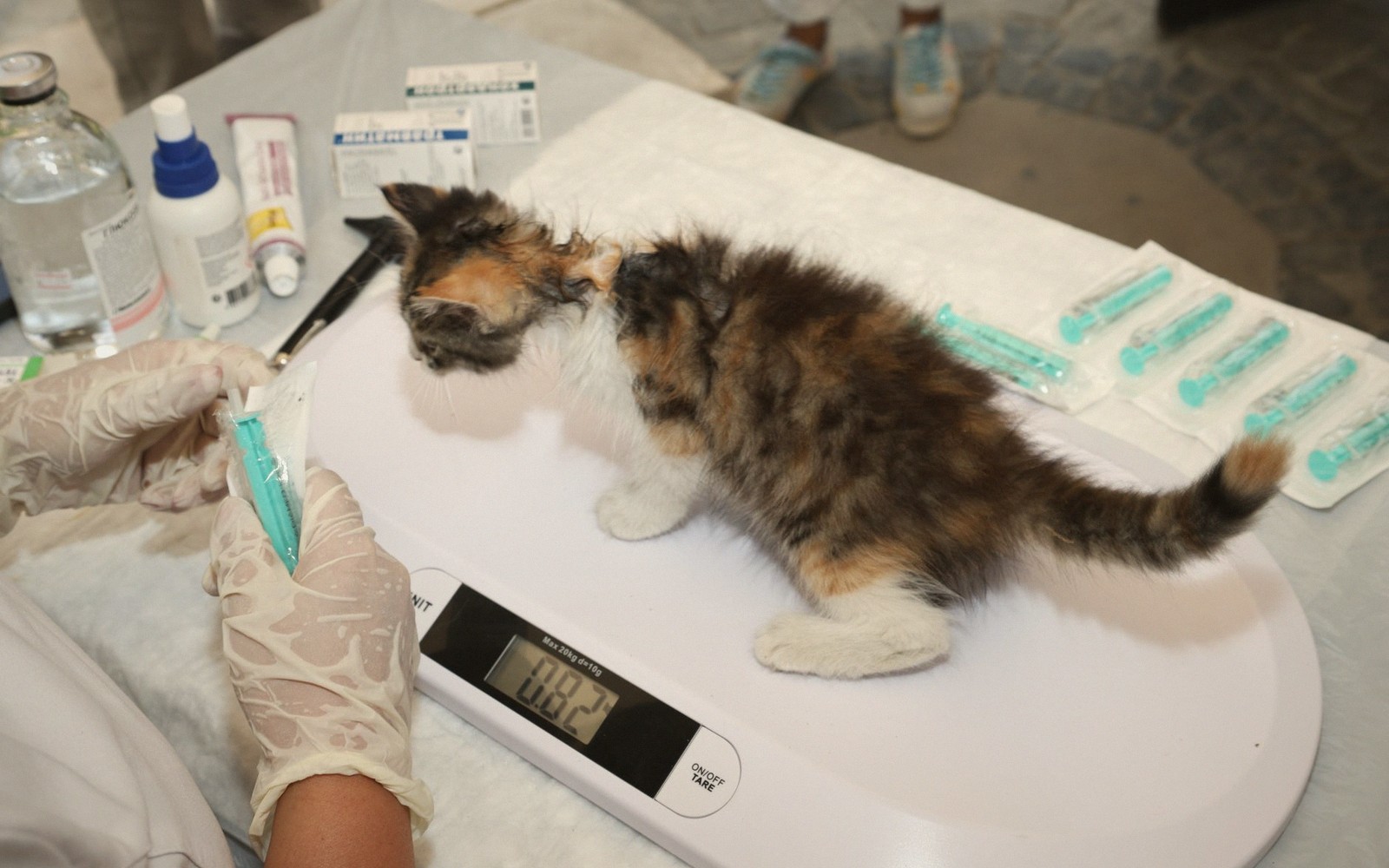
Weight and body condition. This is probably the most used reason to book. Weight is easy to miss at home — you see your animal every day, and gradual change is almost invisible. A nurse will weigh your pet, record it against previous visits and assess their body condition score: a structured, hands-on assessment that goes beyond the number on the scales. Ribs you can feel but not see, a visible waist from above, a tuck behind the ribcage — these are the landmarks. A score too high or too low opens a conversation about diet and exercise that a nurse is trained to have in detail.
Dental scoring. A nurse cannot perform a dental scale, polish and extraction — that requires anaesthetic and a vet — but they can assess what is happening in the mouth right now. Tartar build-up, gum redness, early signs of gingivitis, tooth fractures and the smell that signals bacterial load: all of this is visible on an awake animal with a good light and a calm approach. A nurse dental check either reassures you that home brushing is working or gives you an honest, specific reason to book something further.
Claw trims. This is bread-and-butter nurse work for dogs, cats, rabbits and small pets alike. Overgrown claws catch on surfaces, alter gait and, in worst cases, curve back into the pad — a slow, preventable discomfort. Many owners find claw trims genuinely difficult at home, especially with a wriggly rabbit or an uncooperative cat. A nurse who does several a day handles it quickly and safely, and can show you the technique if you want to manage it between visits yourself.
Anal gland expression (dogs). Scooting, licking at the base of the tail and a distinctive smell are the classic signs. Nurses routinely perform external expression and can advise when a problem needs the vet's attention instead.
Wound checks and bandage changes. Post-operative wound checks are often booked as nurse appointments — the nurse is assessing healing, checking for dehiscence or infection, and reporting to the vet if anything warrants it. Similarly, bandage changes on limbs or paws come through the nurse's diary.
Medication and injection support. Teaching an owner to give subcutaneous fluids at home, supervising the first insulin injection in a diabetic pet, running through an inhaler technique for an asthmatic cat — all of this is nurse territory. The vet diagnoses and prescribes; the nurse makes sure the treatment is delivered correctly and the owner feels confident.
Parasite and preventive health conversations. Checking that a worming or flea programme is current, reviewing product choices for a household with a new baby or a new pet, talking through tick risk by season or geography — these are questions that genuinely deserve time, and a nurse clinic is where they get it.
When the nurse will refer you on
A nurse clinic is not a triage workaround. If something emerges in the appointment — an unexpected lump, a heart murmur, lameness, behaviour that concerns the nurse — they will tell you directly and flag the vet. That is the system working as it should. If your animal is unwell before you arrive, ring the practice rather than attending a nurse appointment: a nurse clinic is for the animal who is stable and there for routine care, not for one who needs urgent attention.